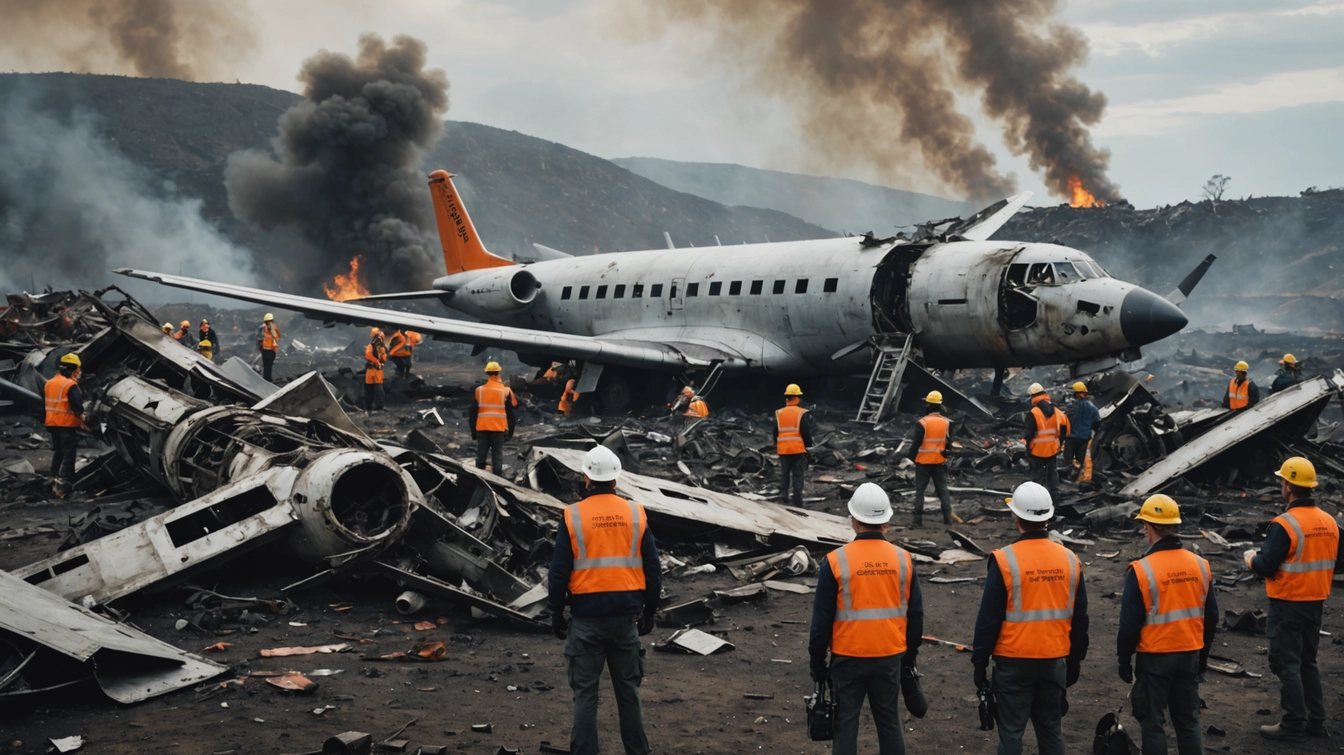
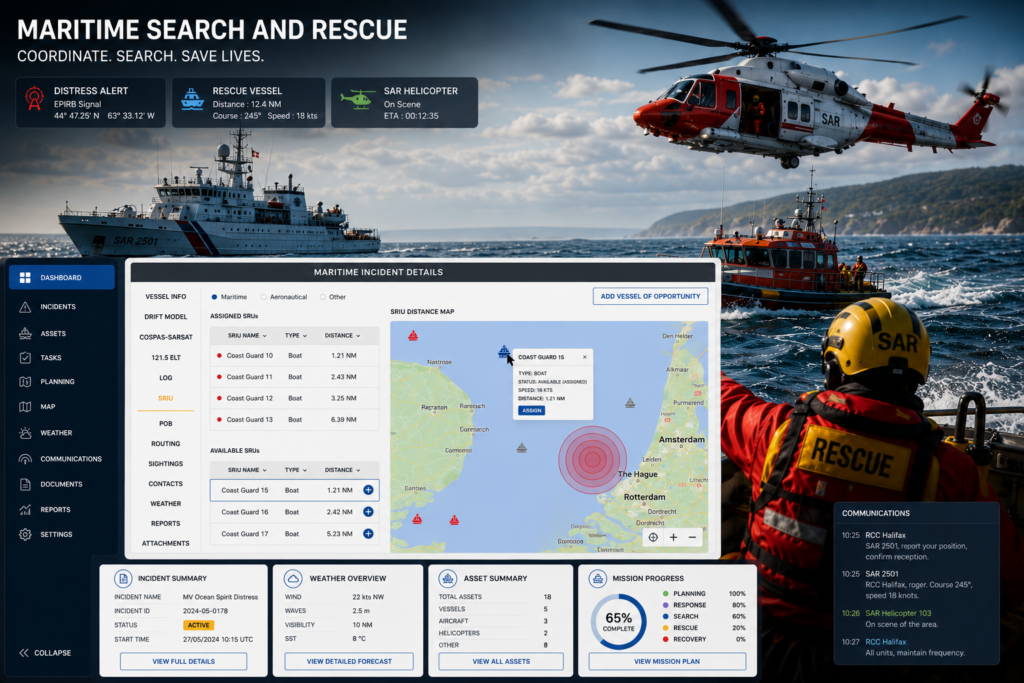
Search and rescue organizations face increasing operational complexity. Maritime emergencies, aviation incidents, and humanitarian crises require faster decision-making, better coordination, and a comprehensive operational picture of the situation.
This is why modern SAR mission management software has become essential for Rescue Coordination Centres (RCCs), Joint Rescue Coordination Centres (JRCCs), Maritime Rescue Coordination Centres (MRCCs), Aeronautical RCCs (ARCC) and government emergency response organizations around the world.
A robust rescue coordination software solution enables teams to reduce response times, centralize information, improve communications, better coordinate missions, and ensure successful outcomes.
However, not all systems are built the same way. If your organization is evaluating maritime search and rescue software or looking to modernize its SAR operations platform, here are the eight essential features a modern solution must offer in 2026.
SAR mission management software is a centralized digital platform designed to support search and rescue operations from incident detection through mission completion. Modern incident management software for SAR operations enables:
- Multi-agency coordination
- Real-time resource tracking
- Centralization of operational information
- Improved search planning
- Incident documentation
- Enhanced operational situational awareness
- Reduction of manual tasks
Advanced platforms are built according to internationally recognized SAR coordination principles and support maritime, aeronautical, and humanitarian response environments. As incidents become more complex and increasingly dependent on real-time data analysis, organizations are moving away from spreadsheets, fragmented communication systems, and manual processes in favor of integrated digital environments.
1. Centralized Incident Management
One of the most important capabilities of SAR incident management software is centralized operational control. Search and rescue missions generate large amounts of information, including:
- Distress alerts
- Resource assignments
- Weather information
- Asset tracking
- Communication logs
- Search areas
- Mission timelines
- Operational decisions
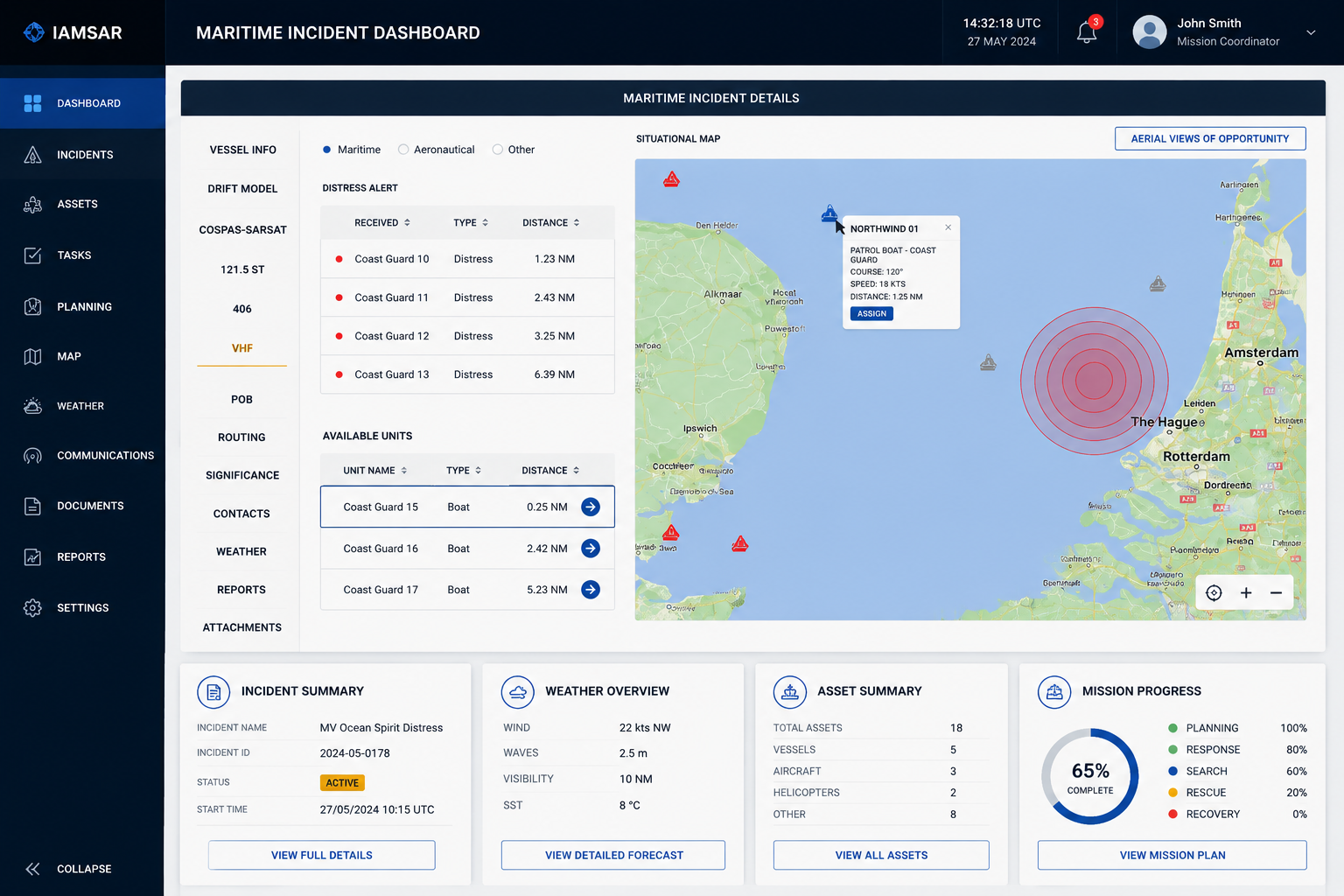
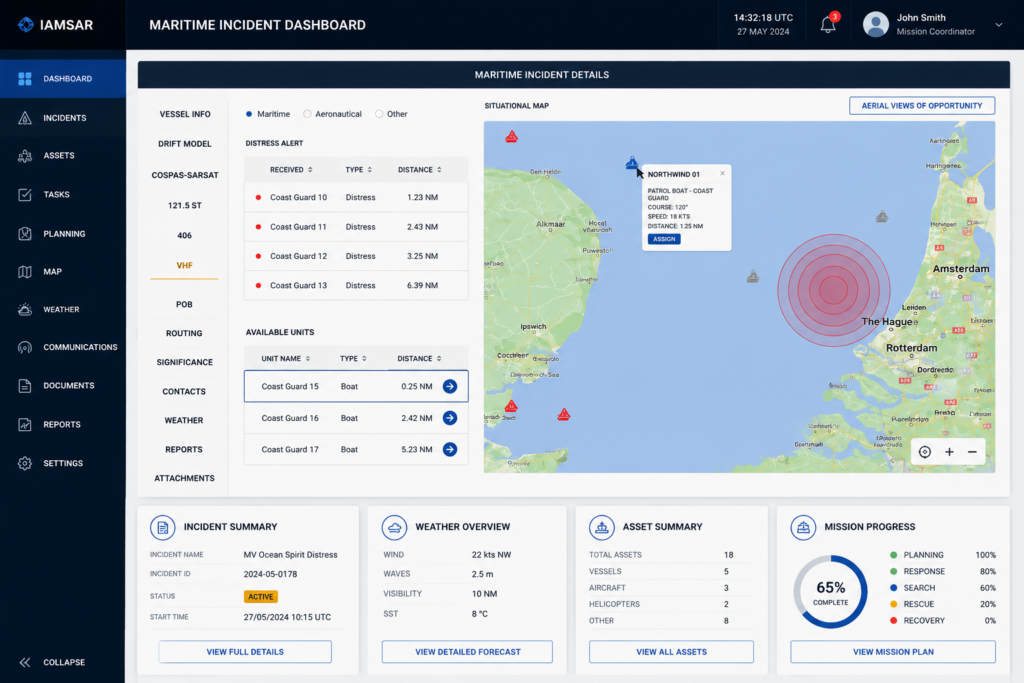
Without a centralized system, critical information can quickly become scattered and difficult to analyze. Our modern IMSAR platform consolidates mission data into a single environment, helping coordinators make faster and more effective decisions. The advanced IMSAR system also enables all stakeholders to access real-time information instantly, improving coordination and reducing errors caused by data duplication.
2. Real-Time Situational Awareness
Situational awareness can determine the success of a mission.
A modern search and rescue software solution must provide real-time operational visibility.
Key capabilities include:
- GIS mapping
- Live weather integration
- Aircraft tracking
- Vessel tracking
- Resource positioning
- Search pattern visualization
- Incident information layers
When SAR Mission Coordinators (SMC) can visualize a rapidly evolving situation in real time, IMSAR helps reduce uncertainty and accelerates decision-making.
This becomes particularly critical during:
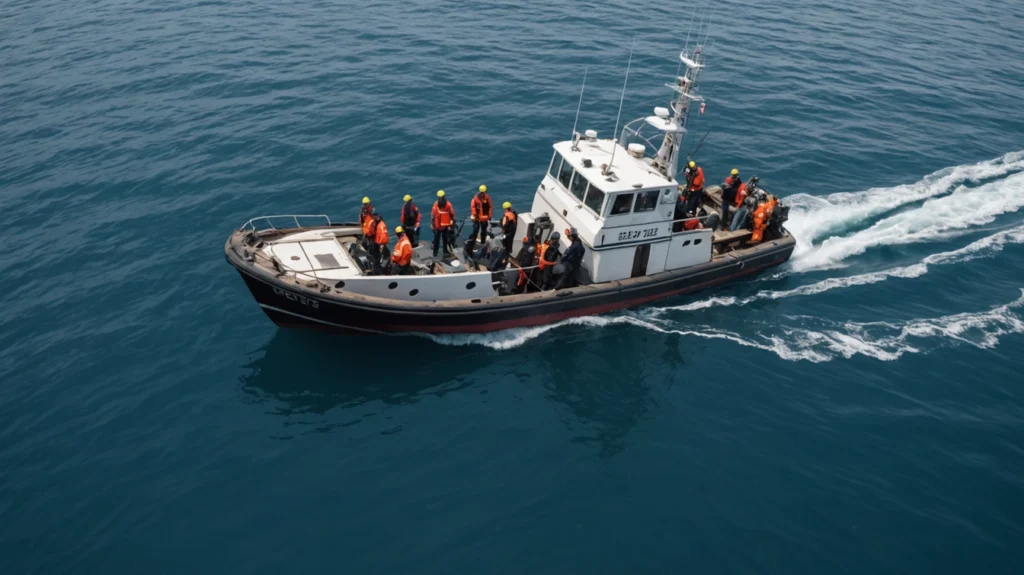
- Maritime incidents
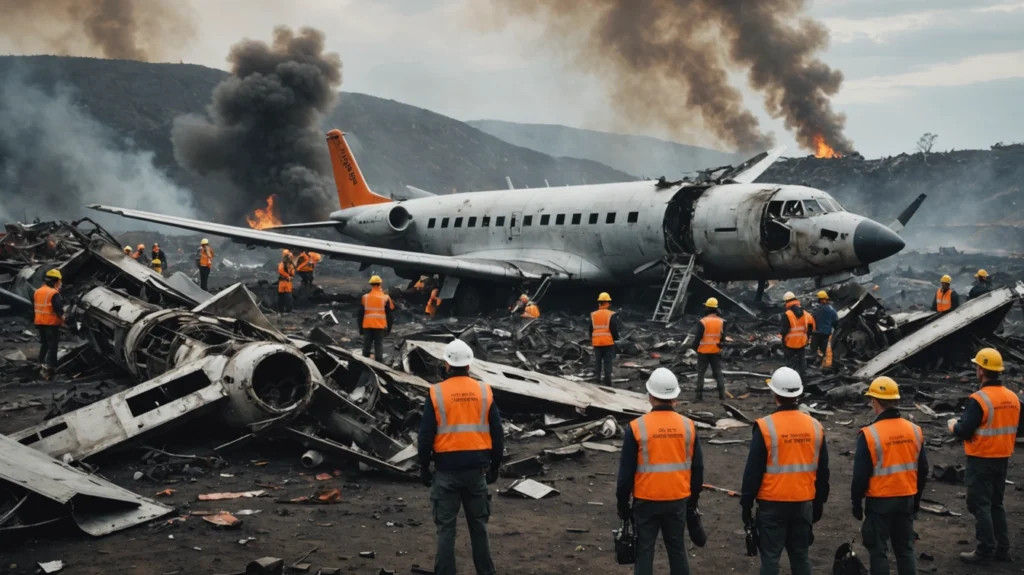
- Aviation emergencies
- Large-scale humanitarian operations
3. Cospas-Sarsat 406 MHz Alert Integration and Display
Our IMSAR platform enables the reception, integration, and real-time display of distress alerts transmitted through the global Cospas-Sarsat satellite network on the 406 MHz frequency. This capability supports multiple types of distress beacons, including:
- ELT (Emergency Locator Transmitter) – Aeronautical distress beacons
- EPIRB (Emergency Position Indicating Radio Beacon) – Maritime distress beacons
- PLB (Personal Locator Beacon) – Personal emergency locator beacons
- SSAS (Ship Security Alert System) – Ship security alert systems
Through this integration, Rescue Coordination Centres can automatically receive distress alerts, immediately visualize their location on the operational map, enhance situational awareness, and accelerate the deployment of search and rescue resources. This capability helps reduce response times and improve the effectiveness of maritime, aeronautical, and land-based search and rescue operations.
4. Multi-Agency Collaboration Tools
Search and rescue operations never occur in isolation. Maritime agencies, aviation authorities, coast guards, military organizations, emergency services, and volunteer teams often work together to resolve incidents. A strong rescue coordination software solution must support this collaboration.
Essential features include:
- Shared dashboards
- Instant data synchronization
- Task management
- Collaborative incident editing
- Secure communication channels
- Common operational picture
Our IMSAR platform enables teams working in physical command centers or remotely to maintain operational continuity and collaborate more effectively toward mission success.
5. Integrated Search Planning Tools
Search planning remains one of the most complex SAR functions. Manual calculations consume valuable time. Modern SAR management software automates and optimizes these processes.
Important capabilities include:
- Probability area generation
- Drift modeling
- Search pattern development
- Resource optimization
- Coverage analysis
- Geographic modeling
Advanced search and rescue platforms now integrate maritime modeling technologies, statistical tools, and planning functions directly into a single interface.
The objective is simple: Reduce planning time while improving operational accuracy.
6. Cloud Accessibility
SAR coordination no longer takes place exclusively in fixed coordination centers.
Personnel may operate:
- In RCC facilities
- On board vessels
- In aircraft
- During field deployments
- In mobile coordination structures
Cloud-based solutions provide greater flexibility.
Benefits include:
- Remote access
- Faster deployment
- Reduced infrastructure and training requirements
- Collaboration between multiple sites worldwide
- Scalability (soon enhanced by artificial intelligence)
- Lower operating costs
For organizations with geographically dispersed SAR capabilities, cloud technology is quickly becoming essential, and IMSAR is designed to meet this need. IMSAR is also offered as On-Premises installation instead of the Cloud if required.
7. Comprehensive Operational Logging
Documentation is essential.
SAR operations require complete traceability.
Incident timelines, operational decisions, resource deployments, and communications often need to be reconstructed for:
- Legal reviews
- Training improvements
- Regulatory requirements
- Quality assurance
- Post-incident analysis
Effective search and rescue software automatically records operational activities.
Our advanced IMSAR systems provides:
- Permanent mission logs
- Automatic timestamping
- Decision tracking
- Event playback
- Historical incident reconstruction
These capabilities support continuous improvement and future preparedness.
8. An Intuitive User Experience
Effective technology must be easy to use. Complex software increases cognitive workload during critical operations and raises the risk of user-related errors.
Our modern IMSAR search and rescue software includes:
- Intuitive navigation
- A modern, user-friendly interface
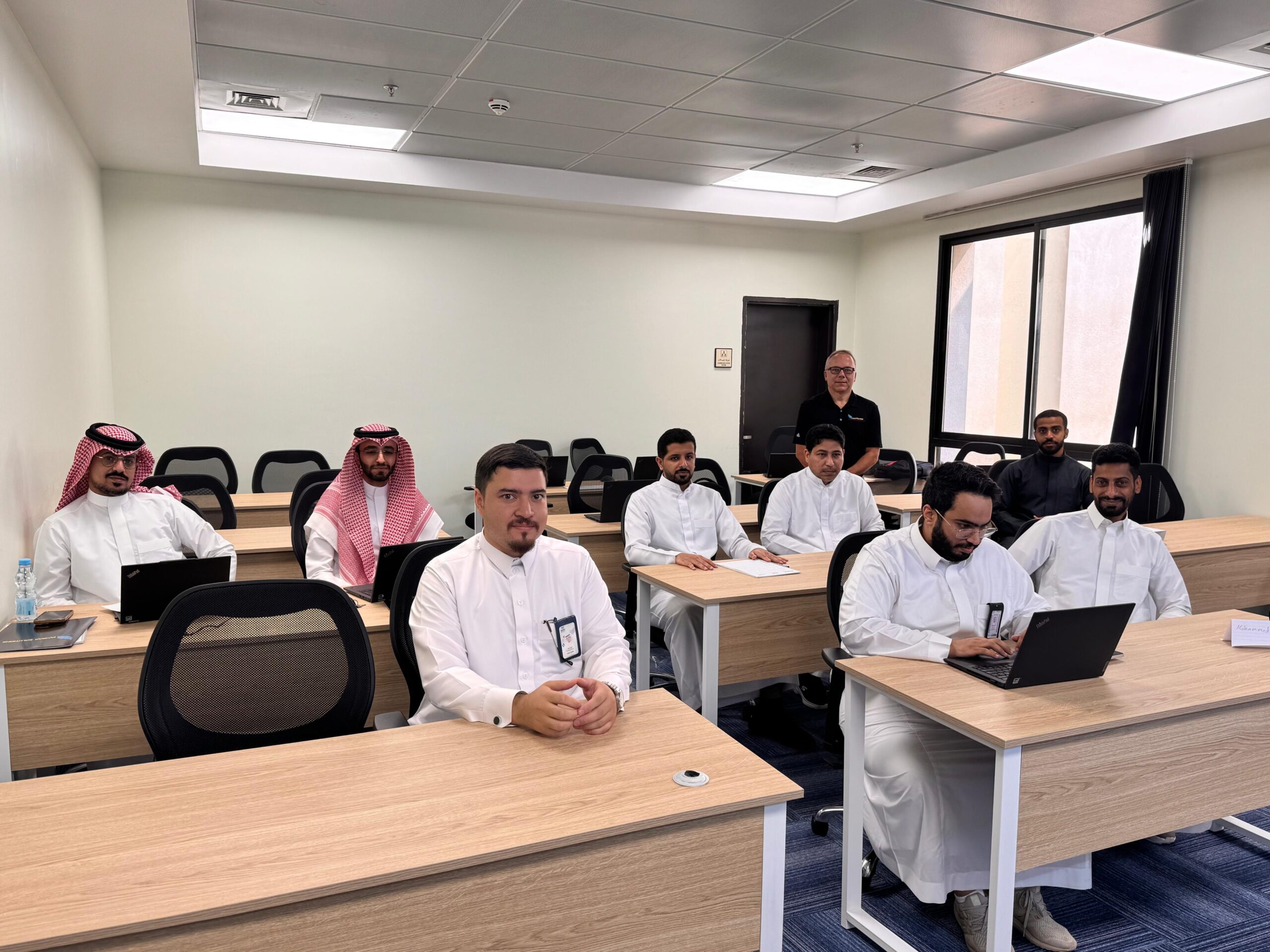
- Comprehensive training delivered by experts who participated in the software’s development
- Rapid data entry
- Fewer manual actions, resulting in reduced response times
Our platform, designed directly by SAR experts from the Canadian Armed Forces and the Canadian Coast Gard, outperforms generic emergency management systems because it reflects real-world operational realities and draws on more than 280 years of combined SAR experience.
Meet the team of experts who provide training and support for operating our software worldwide.
The objective is simple:
Allow SAR personnel to save lives instead of managing complex tools.
Benefits of IMSAR Search and Rescue Software
Organizations that implement our integrated platform gain significant operational efficiencies:
Faster Response Times
Centralized information reduces incident response and processing times.
Improved SAR Coordination
A centralized operational picture enhances collaboration among rescue stakeholders.
Reduced Task Complexity
Automation minimizes repetitive tasks and improves operational responsiveness.
Shorter Response Delays
Real-time data improves decision-making and execution speed, helping save lives.
Greater Scalability
The software evolves continuously to address emerging operational challenges.
IMSAR Search and Rescue Software Use Cases
Maritime Search and Rescue
Maritime incidents require coordination among vessels, aircraft, RCCs, weather services, and satellite distress systems.
Modern software centralizes these critical elements.
Aeronautical Search and Rescue
Aviation emergencies require rapid and precise coordination.
Modern platforms simplify information management and operational planning.
Humanitarian Response Operations
Humanitarian operations often involve multiple organizations.
Integrated platforms improve communication and transparency.
Looking for a Powerful SAR Mission Management Solution?
Discover how our IMSAR intelligent platform helps teams better coordinate operations,
accelerate response efforts, and improve mission outcomes.
Explore a solution specifically designed for maritime, aeronautical, and humanitarian missions
within a single centralized operational environment.
Discover how IMSAR Search and Rescue Software helps coordination centers,
maritime organizations, government agencies, and emergency response teams coordinate
missions faster, improve situational awareness, and optimize operational performance.
Discover today why SAR organizations around the world trust IAMSAR Solutions to enhance mission coordination, improve response efficiency, and save lives.
Discover IMSAR Today
As the global distributor of IMSAR Mission Management Software, IAMSAR Solutions is committed to helping organizations modernize their search and rescue operations with industry-leading technology and expert support.
✓ Free Training
One-Day Training Session Included with Acquisition
✓ Free 30-Day Trial
30 days complete acces to the Cloud platform
✓Technical Support
Complimentary Technical Support Throughout the Evaluation Period
✓ Global distributor
IAMSAR Solutions is the only distributor globally.